
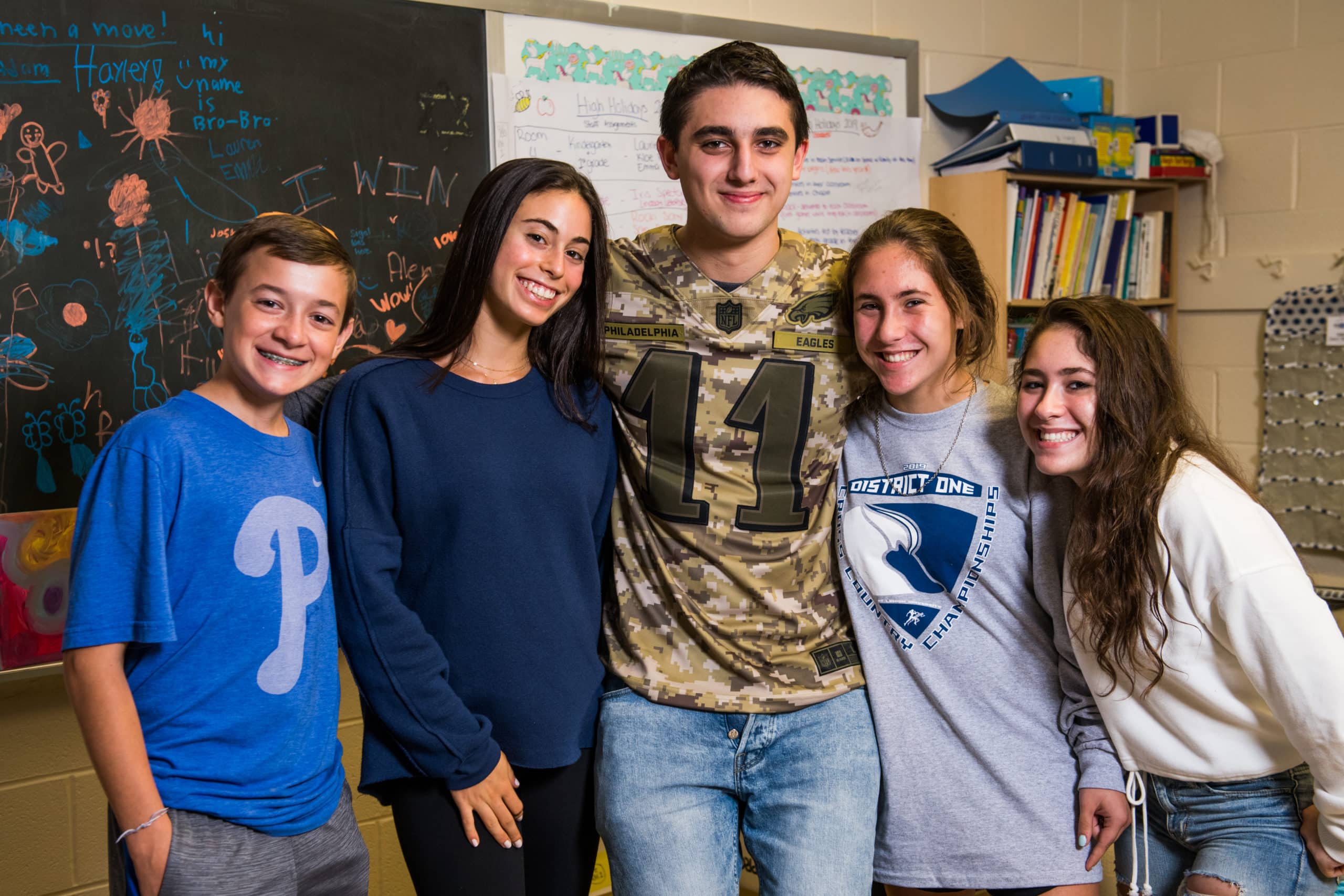
Becoming a teen is a big transition, both for preteens and for their parents. Today’s realities can make that shift feel even more intense. Our program meets preteens and families at this pivotal moment, offering real support during the years leading up to and beyond b-mitzvah.
Our Curricular Program for 5th–7th Graders & Their Families (formerly “B-Mitzvah”) includes 16 one-hour sessions for preteens and 14 hour-and-a-half sessions for preteens with their families to choose from. All sessions feature fully scripted, plug-and-play curriculum designed for clergy and educators across North America. Each session is experiential, accessible, and ready to implement, giving communities a practical way to engage preteens and their families as they face the joys and challenges of the teenage years. Your subscription also includes top-tier training through the Carol Lowenstein 5th-7th Grade Training Institute.
The program includes a dedicated b-mitzvah track that helps families unpack the “why” behind the ceremony: What does it mean to become a Jewish adult? Why mark this moment publicly? How do we prepare not only to chant Torah, but to host, to be a guest, and to take our place in Jewish community? At the same time, the curriculum reaches well beyond the ceremony itself. It addresses the everyday realities of preteen life: growing independence, navigating relationships, and building a strong Jewish identity.
This program starts long before anyone has chanted a verse of Torah and continues long after everyone has stepped off the bimah. It is about the ongoing process of becoming a teen, rooted in Jewish wisdom, community, and care.
In our easy-to-use curriculum, all interactive family education sessions and preteen modules:
- Frame the b–mitzvah experience as the process of “becoming a teen”
- Foster dialogue between parents and preteens
- Address the social-emotional needs of 5th -7th graders
- Draw on Jewish teachings and ritual to address current issues in the lives of families
Hundreds of families have experienced our Curricular Program for 5th- 7th Graders & Their Families sessions over the past 4 years and the feedback has been overwhelming:
- 91% of parents agreed that “Today’s session helped me feel like I am a part of a Jewish community that supports me as a parent.”
- 83% of preteens agreed that “Today’s session helped me feel like I am a part of a Jewish community that supports who I am.”
- 91% of clergy say, “[this] program aided me to help preteens connect Jewish wisdom to their social-emotional development.”
– Parent of a 6th Grader in Colorado
The breakout session with parents felt like a safe space to connect with other parents about challenges we’re facing today as Jews and as parents of preteens.
Logistics
What: All sessions are experiential in nature and include games, Jewish texts, prompts and activities that will get participants moving around the room and interacting with one another. The program is designed to be as “plug and play” as possible for you as the educator. Each session contains a sample invitation for parents, all handouts ready to print, a materials list and a full script to use as needed.
Who: This program is designed for 5th- 7th graders and their parents. Some of our partners choose to run our program with only 6th grade, some choose to run it with only 7th grade. Some choose to run it with all three grades in parallel. Smaller communities often run the program with a combination of 6th and 7th grade families. We are currently piloting 5th grade family sessions as well.
How: Typically, our partners run 2-3 family sessions per school year and 4-5 preteen sessions. Each Family session is designed to be about 90 minutes of content in person and is often run by a combination of clergy and educators. Each Preteen session is designed to be approximately 60 minutes of content and is often run by a classroom teacher. All of our content is available for both in-person and online meetings.
Session Summaries
Family Sessions
All family sessions are designed for preteens and their parents (or other guardians) to learn together, to listen to one another’s perspectives, and to enrich the meaning of the b–mitzvah as a lifecycle ritual:
| Session | Objectives | Texts |
|---|---|---|
| 5th Grade: Family: What’s the Deal? | This session explores the implicit and explicit “deals” or agreements parents and preteens have made as members of a family. This session gives families an opportunity to think together about what each family member is responsible for, as well as what they need and deserve. Together, each family will make their own brit, or covenant. | Torah, Mishnah |
| 5th Grade: Where Am I In the Story? | This session helps participants understand that Torah, as the story of the Jewish people, continues to unfold as each generation adds their own voices and experiences. Students will learn about their assigned Torah portion (parasha), their responsibilities in the Torah service, and explore their relationship with learning Torah. Parents will relate Jewish stories (broadly imagined) that are important to them to impart to their children. | Talmud, Rabbi Avi Weiss |
| 5th Grade: God-versations: Beliefs, Metaphors, and Beyond | This session fosters dialogue between parents and children about their perceptions of God or a higher power. Students will explore how different metaphors for divinity can reshape their understanding of spiritual relationships, while parents will delve into Jewish texts that offer diverse perspectives on believing or not believing in a higher power. This session is inclusive of atheists, agnostics, and interfaith families. | Tanakh, Jewish philosophy |
| 5th Grade: Teshuvah: Mistakes, Apologies, and Changes | This session empowers participants to explore the key elements of teshuvah (the process of reflecting on mistakes and making amends) and how these principles can be applied within their own relationships. Students will engage with a classic Beit Hillel-Beit Shammai debate, honing their skills of extracting modern relevance and personal meaning from traditional texts. Together, parents and children will connect these teachings to their own lives, fostering a meaningful dialogue about mistakes, regret, and forgiveness in their parent-child relationship | Rambam, Talmud, modern rabbis |
| B–Mitzvah: Why Am I Doing This? | This family session is recommended as one of the first your community runs for your families. This session provides some history and context to b–mitzvah in the Unites States and grapples with the question in the title – why have a b–mitzvah? Students and parents explore this question from different points of view and are given the chance to share what they have discovered. | Modern Rabbinical thought, midrash |
| Today You Are An Adult: What Does It Mean To Become A Teen? | This family session is also recommended as one of the first your community runs for your families. The session covers the basic stresses that come with preparation for the b–mitzvah—and it encourages parents and students to have empathy for one another. Topics include mapping the transitions that take place from childhood to teen years, exploring risks and responsibilities, and making sense of the spoken and unspoken rituals of entry into Jewish adulthood. | Mishnah |
| Repairing the World: What’s a Mitzvah? | In this session, participants will make a connection between the b–’mitzvah,’ ‘mitzvah’ projects, and the world of interpersonal mitzvot. and explore different ways of doing a “mitzvah project. ” Participants will also examine the differences between Chesed, Tzedakah and Tzedek and consider what aspects of Tikkun Olam, repairing the world, are most meaningful to them. | 16th century kabbalist |
| Beyond Thank You: What Does It Mean To Be A Host? A Guest? | This session takes a close look at the social and ethical obligations of being a host and being a guest. What are the best ways to honor the efforts of a host? What are our priorities when we are planning to host an event? The session has families practicing communication skills and etiquette skills related to both being a guest and hosting. | Yiddish folktales, Talmud |
| Do You Speak My Language? | Inspired by the Covid-19 pandemic when parents and their children spent more time together under one roof than ever before, This session gives parents and children the opportunity to come together – even if on their own screens – to talk to one another in real time about the gifts and challenges of this new normal. They will reflect on their own needs and communication styles and explore strategies for truly connecting with each other at a time when they are in the same house or apartment but not necessarily finding genuine ways to connect. | Torah |
| Fitting In and Standing Out: Navigating Gender Stereotypes in the Teen Years | This session looks at today’s teens and the pressure they face to define their identities. This session explores gender codes and the ways that stereotypes shape those codes, with particular attention paid to the context of becoming a teen. | Torah |
| “You Just Don’t Understand”: How Do Parents and Teens Talk To Each Other? | As teens grow towards independence, it is typical to experience tension and communication breakdown with parents. How is communicating with a teen different than communicating with a child? What are the best ways for teens and parents to give each other constructive feedback about their communication styles? This session looks at the Jewish values of honoring parents, the ethics of speech, and the importance of critical feedback in a parent-teen relationship. | Midrash |
| “I’m Jewish AND…”: Exploring Jewish Identity and Antisemitism Today | This session is designed for any parent, of any religious or cultural background, to feel comfortable exploring what it means for their child to identify as a Jewish person and develop a healthy Jewish identity. Parents and preteens explore the complexity of Jewish identity and learn how we can collectively move from a world where Jewish identities are judged to one where Jewish identities positively intersect with other identities. Preteens have an opportunity to discuss with their peers the good and bad of identifying as a Jewish person in middle school and online and the experiences that they have had around antisemitism. Parents have a parallel conversation and then join their preteens for an opportunity to share with one another within the family. | Shulchan Arukh |
| Now What?: Moving From Teen to Eighteen | This session provides a space for parents and preteens to explore the next stages of their life journey and their Jewish journey, learn about Jewish wisdom on character, and begin a dialogue about the changes in their Jewish life. Together, preteens and parents examine the difference areas of growth between becoming a teen and becoming an adult. Separately, preteens discuss Jewish text around the different roles they occupy in their social circles and the kind of person they wish to be. Meanwhile, parents get a chance to connect in small groups around the challenges facing their teens and their hopes for their teens in the coming years. Once back together, the entire group reflects on the different hopes they have for the coming years and the growth of the preteens and close with a contemporary blessing. | Midrash |
Student Sessions
Sixth Grade
| Session | Summary | Texts |
|---|---|---|
| Growing Up | This session is connected to the idea of the b–mitzvah photo montage. It has each student looking back at childhood to ask: What were some of the events and memories that shaped childhood? What choices did they make? What were moments of deep learning? The session reflects on the transition inherent in the life cycle of b–mitzvah and exploring what it means to transition out of childhood and into becoming more self-aware. | Midrash |
| Center of Attention | This session focuses on the upside and downside of being at the center of attention and outlines the many ways that a b–mitzvah celebration can put someone at the center of attention. Introversion and extroversion are explored as well as Jewish concepts of responsibility and humility. | Liturgy |
| Simcha: Where’s Your Joy? | This session focuses on how “Simcha, ” one of the core values of celebration in the Jewish community, might be in conflict with the average preteen’s b–mitzvah experience. The preteens are helped to identify and embrace the variety of feelings that they might associate with elements of their b–mitzvah celebration. | Chatam Sofer |
| Reading Between the Lines: How to Engage With Text | This session leads students through specific tools they can use to approach any text. Students are encouraged to ask questions about the text, think about the missing voices and information, and provide their own ideas and answers. This is a hands-on experience of engaging with texts that can help preteens as they prepare to create a drash for their own ceremonies. | Torah |
| Looking Good, Feeling Good | This session is an in-depth exploration of how choices regarding clothing are impacted by ideas about tradition, modesty, beauty, attraction, and social convention. Students will explore their feelings around clothes for everything for school, B-Mitzvahs and everything in between. | Talmud |
| Would You Rather? | This session is an exploration of ethical decision making in the context of the day-to-day dilemmas in preteens lives. Students will consider all the various factors that contribute to their choices and consider the different ways there are to approach a problem. | Talmud, Rabbinic Thought |
| Prayer Is/Prayer Isn’t | This session is an exploration of prayer. Participants will learn that prayer is different things for different people as they identify reasons why they might find prayer personally meaningful. During the session, they will participate in a prayer experience that includes writing their own original prayers, reading prayer texts aloud, or discussing their own ideas about a particular prayer with their peers. | Liturgy |
| Celebrate! | This session is specifically for communities where it is typical for preteens to have a social event with DJs, food, music, and games. Preteens explore the peer pressures around b–mitzvah celebrations and reflect on values that can guide them in how they experience, plan, and participate in celebrations. | Talmud |
Seventh Grade
| Session | Summary | Text |
|---|---|---|
| Teen Stuff | This session asks: How are teens treated by adults? What expectations do teens place on each other? What unique challenges do teens face as they undergo physical growth? What are the ways that teens are judged based on gender stereotypes or other social codes? These questions animate this session and help teens to gain awareness of the social pressures that different teens face as they journey to young adulthood. The session also helps teens relate to Jewish wisdom on self-reflection and personal growth. | Pirkei Avot |
| Making Friends | This session looks at how ideas of friendship are shaped and how unrealistic expectations of friendships can cause social tension. In particular, the session looks at the ways that b–mitzvahs can put stress on friendships or help to support them. Topics include the challenges of being a “best friend,” the role of friends at celebrations, and expectations regarding invitation within the b–mitzvah class. | Rambam |
| Zones of Learning: Comfort, Stretch, and Panic | This session introduces the concept of zones of learning and helps students recognize what these zones might look and feel like for themselves. In between the zones, students explore Jewish wisdom on balancing between the zones. Finally, students set stretch goals for themselves as they enter adolescence. | Mishnah Avot, Shemot |
| Posting | This session looks at the ways that students use online and smartphone posts across platforms and discusses how each platform changes communication with friends. It includes a discussion of Jewish values of privacy, respect, and honesty. | Talmud |
| Money and Gifts | This session looks at some of the traditional gifts given to a b–mitzvah, including money, as well as the role of “gift bags” and giveaways that people feature at their celebrations. The discussion reflects family expectations around saving, spending, and tzedakah, and the role of non-monetary gifts. Topics include communal gifts and ritual items. | Rambam |
| Fill in the Blank: God is_____ | In this session students will examine their personal views about God as well as identify what has influenced them to form their opinions. As part of this exploration, students will examine how God is depicted in various text and prayers and consider how they feel about these characterizations. Students will be encouraged to see the multitude of valid perspectives and ideas about God in the past and present. | Tanakh, Liturgy |
| GenZen: How to Get Un-worried | This session is intended to help preteens understand that anxiety is a natural and normal emotion that most people experience. Students will be given many opportunities and experiences to help them build a toolkit of mindfulness strategies to reduce stress and improve their concentration and confidence. | Rabbinic Thought, Mishnah |
| God-versations: Beliefs, Metaphors, and Beyond | Participants encounter different ways of relating to God or a higher power as Jews and explore how language used to talk to or about God can affect their relationship with the divine. They will create a self-portrait to represent their current theology at the start of the B-Mitzvah journey. | Tefillah |
| Is That Prayer? | Participants will expand their idea of what prayer looks like while they learn about the various reasons that people pray. They will consider the idea that spirituality could be experienced through various activities or actions while they themselves experiment with activities that could be expressions of prayer and spirituality. | Rabbi Nachman of Bratslav |
| Why Shabbat? | Participants will identify the personal, social, and spiritual values underlying Shabbat. They will explore the models of shomer (guarding) Shabbat and zocher (remembering) Shabbat as different ways to relate to Shabbat observances. They will identity an observance that would help make Shabbat more meaningful in their own lives. | Tanakh, Ahad HaAm |
Moving Traditions is now proudly partnering with ShalomLearning to offer the Curricular Program for 5th- 7th Graders & Their Families to their synagogue partners.

Donate
Your gift to Moving Traditions helps Jewish youth discover who they are through the pursuit of personal wellbeing (shleimut), caring relationships (hesed), and a Jewish and feminist vision of equity and justice (tzedek).