
Moving Traditions’ DIY Staff Training equips senior staff at synagogues, Jewish educational programs, camps, youth groups, and trip providers with a ready-to-use, structured curriculum they can facilitate with their own teams.
The program includes a choice of six 90-minute sessions designed to strengthen the adult and teen leaders who shape Jewish youth experiences. Powered by Jewish wisdom and grounded in the values of shleimut (personal growth), hesed (healthy relationships), and tzedek (responsibility and justice), each session includes clear facilitation guidance and scripted, experiential activities focused on real-world challenges. Topics include setting boundaries, consent, navigating antisemitism, understanding gender norms, managing responsibilities and delegation, and pushing outside one’s professional comfort zone. Participants build practical communication skills, clarify expectations around power and leadership, and strengthen their capacity to serve as caring, consistent role models.
The result is not just better-trained staff, but more thoughtful, proactive leaders, equipped to foster brave, healthy, and values-driven Jewish communities where teens can truly thrive.
Get Involved
Want access to DIY Staff Trainings and resources? Contact Moving Traditions to learn how we can support your organization.
DIY Staff Training Goals
We envision a world where every staff member working with Jewish youth can:
- Listen to camper’s concerns with empathy and understanding
- Model appropriate touch that is consensual, supportive, and respectful
- Challenge the use of sexist, homophobic, and transphobic language
- Navigate questions about dress expectations without shaming
- Reduce social pressures around crushes, romance, and hook-ups
- Create inclusive communities that support LGBTQI youth
- Communicate organizational policies through the lens of Jewish values
DIY Staff Training Session Options
Boundaries, Communication, and Consent
This session addresses the question:
How do we maintain the playful freedom and physical “closeness” of Jewish camps and travel experiences while ensuring that staff and participants respect one another’s personal boundaries?
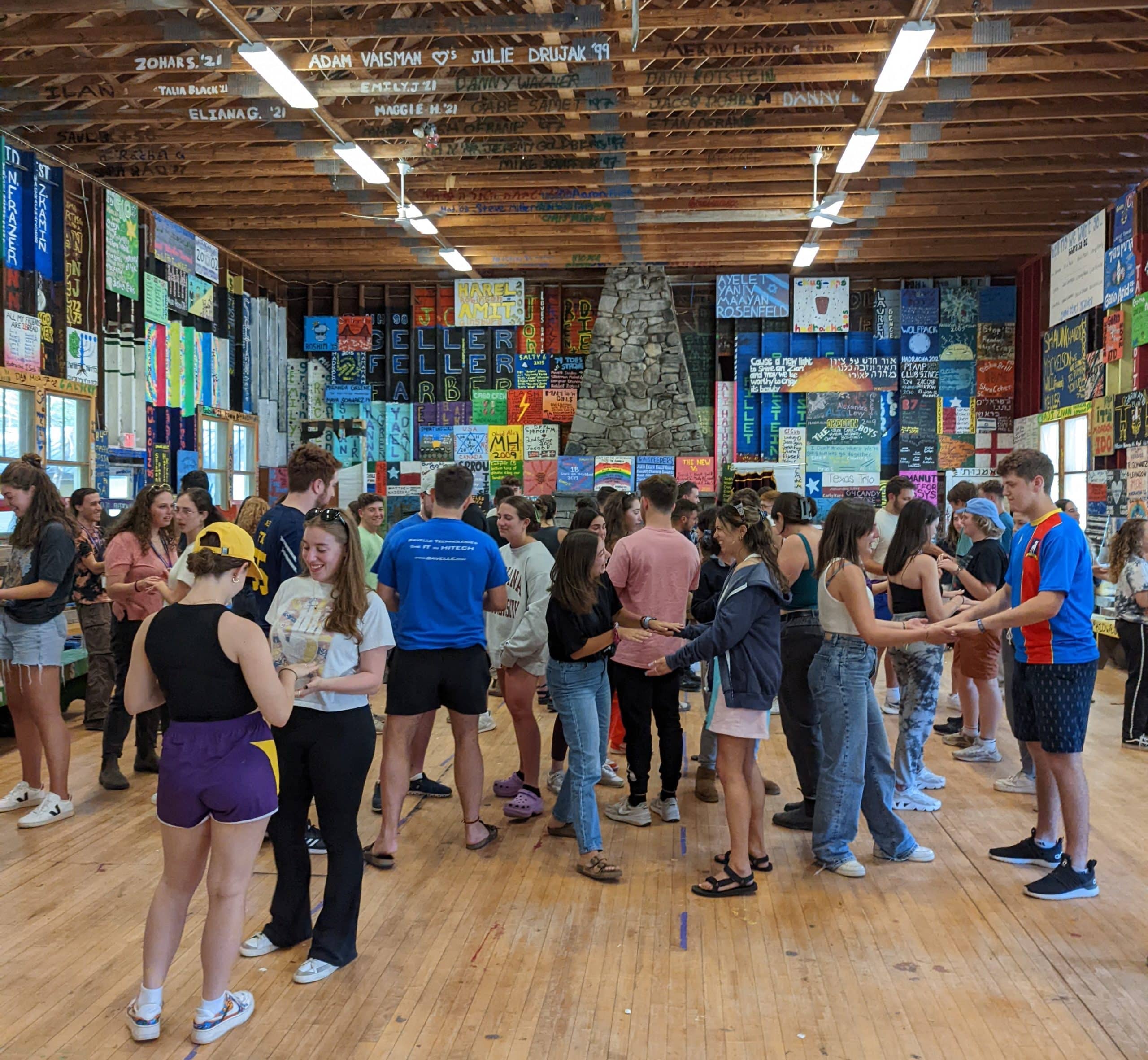
Moving Traditions’ embodied consent education training session combines elements of bystander intervention skills, assertiveness and empowerment training, and dance education, to help staff and participants of all genders understand the underlying dynamics of power and consent and learn how to set and respect boundaries. Through a series of games and movement exercises that can be run in less than an hour, participants experience:
- Maintaining awareness of personal space and respecting the space of others.
- Making a safe and boundary-aware physical connection with someone else in a consensual way.
- Reading the body language and facial expressions of others.
- Evading or escaping unwanted touch.
- Disrupting others when necessary.
- Discussing consent and social responsibility.
The curriculum includes a Jewish educational framing focused on healthy boundaries, positive relationships, and being an upstander. This is a great session to train your staff and it is a session that your staff members can lead for preteens and teens.
Gender and Wellbeing for All Teens
This session addresses the question:
How are participants of different genders experiencing safety and wellbeing in immersive summer programs and what can be done to make those experiences better?
During adolescence, navigating gender and learning when to fit in and when to stand out are top of mind. In this session, we will look at how pre-teens and teens are interacting with the changing world of gender codes, norms, expression, identity, and language and discuss ways to create more inclusive environments for all teens. We will discuss the experiences of boys, girls, trans and non-binary teens. Participants will:
- Map how and where gender shows up in terms of activities and relationships.
- Examine the landscape of gender codes, norms, and expression that teens are redefining, and why this matters for supporting teens from an adolescent wellness approach.
- Better understand the role of language in expressing and affirming gender.
- Experience tools to have inclusive and affirming conversations with teens about gender identity.
- Explore the Jewish framing for an expansive understanding of gender.
Healthy Relationships and Sexuality
This session explores the question:
What is the role of staff in supporting healthy summer relationships?
Even when staff effectively communicate the boundaries regarding sexual encounters, some teens are going to find ways to make-out or hook-up. It is also inevitable that staff will become aware of some of these encounters, and that, in some cases, teens will turn to staff for help navigating the ups and down of relationships or dealing with more crisis situations that arise. How can staff be better prepared for these situations, so that they understand what is helpful and what is potentially harmful? In this session, we will use games, videos from the CultureShift video series, prompts and Jewish wisdom to explore how staff actions can positively or negatively impact the culture of immersive summer experiences around hooking up and healthy relationships. Staff will be encouraged to practice various responses that decrease the social pressure in real-life situations that they may find themselves in with the participants in their care. This session is for staff of any level who interact with youth.
Participants will:
- Explore their role in creating a healthy culture around sexuality and hookups.
- Understand how to appropriately support participants on their individual journeys towards healthy relationships.
- Discuss the obstacles to reporting breaches of culture and appreciate their part in holding one another accountable.
Antisemitism and Jewish Identity
In this session, we will learn about how antisemitism shows up in the real world, both its obvious and subtle forms. We will reflect on camp’s responsibility in preparing youth to encounter antisemitism, as well as its role in promoting positive Jewish identity and sense of belonging.
Participants will:
- Reflect on their own experiences of antisemitism.
- Identify and understand common antisemitic tropes, examining how antisemitism sometimes functions differently compared to other forms of prejudice.
- Identify camp’s role in providing education around, or relief from, antisemitism.
Camp Staff: What Am I Responsible For?
In this session, we will learn about the responsibilities and expectations of new counselors and staff members. Participants will explore when to seek guidance from peers or senior staff, develop strategies for handling challenges, and reflect on their role as mentors, ensuring they provide meaningful support to the youth they serve.
Zones of Learning: Comfort, Stretch, and Panic
In this session, we will learn about the comfort, stretch, and panic zones and how we can identify them in ourselves and the youth we serve. We will look at Jewish text on these zones of learning, reflect on barriers that keep youth and adults in the comfort zone, and set goals for ourselves.
Participants will:
- Understand the concept of zones of learning, recognizing what these zones might look and feel like for themselves
- Explore Jewish wisdom on balancing between the zones
- Set professional stretch goals for themselves
DIY Staff Training Video Series
The DIY Staff Training series includes interactive videos and discussion prompts, providing staff with real-life scenarios and Jewish wisdom to help them reflect on their role in shaping camp culture.
We also offer live training events to provide deeper learning opportunities for staff and organizational leaders.
Watch a sample video from the series:
Funding Partners
Women of Vision of the Jewish Federation of Greater Philadelphia
Donate
Your gift to Moving Traditions emboldens Jewish youth to thrive through the pursuit of personal wellbeing (shleimut), caring relationships (hesed), and a Jewish and feminist vision of equity and justice (tzedek).