

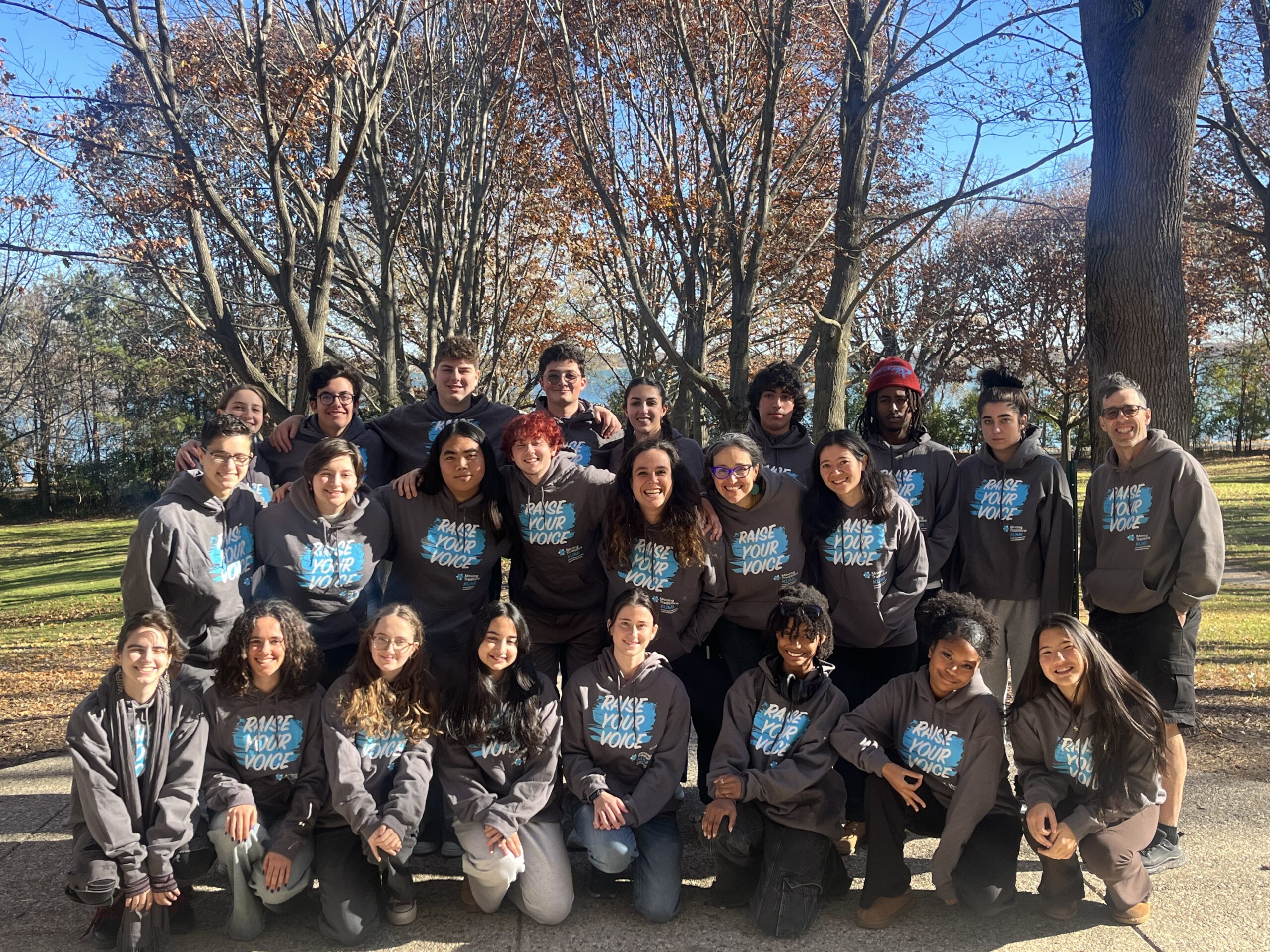
Kumi Justice Retreats are a unique opportunity for Jewish teens (10th-12th graders) to interrupt racism, antisemitism, and other manifestations of oppression. This teen leadership experience imparts knowledge and skills for exploring justice and equity from a Jewish lens.
Over the course of two in-person retreats and monthly community of practice zoom calls, teens in this program will hear from expert speakers in the field, have deep conversations related to their identities and experiences, and engage in workshops that teach how to turn their values into action. Together, they will contribute to the building of more inclusive communities and movements for justice as Jews.
The Kumi Justice Retreat experience takes place over the course of two semesters. Kumi participants will learn the foundational knowledge of equity and justice work in the Fall semester. This work will culminate with a trip to a US city in the Spring semester.
“My time at Kumi was incredibly meaningful because it created a unique space where my Jewish identity and my identity as a Jew of Color were both fully seen. It was powerful to connect with other teens who understood what it feels like to be “the only one” in certain Jewish spaces, and to finally not be the only one in this one.” – Recent Kumi Alum
Applications Now Open!
Apply to Kumi Justice Retreats by May 1, 2026
Learn more about eligibility and the application process, register for an info session, or nominate a teen you know who may be interested in applying.
Program Details
Kumi is a year-long retreat-based experience where teens from across the country come together to learn and build a Jewish justice community. Each semester, we run an in-person retreat with supporting virtual Community of Practice meetings to deepen learning.
In the fall, Kumi: Foundation allows teens to learn foundational knowledge for exploring justice and equity from a Jewish lens.
In the spring, Kumi: Exploration invites Kumi alumni to use the history and present of an American city to make real-world connections to the topics they learned in Kumi: Foundation.
One unique aspect of Kumi is our intentional community-building through two tracks: Jews of Color Empowerment and Anti-Racist Allies. In keeping with racial justice best-practices, these two tracks will be learning together and separately over the course of the experience to provide intentional and targeted support of their learning. Each semester-long hybrid experience will help Kumi participants get a strong shared foundation of anti-oppression theory and practice and also provide an opportunity to regularly reconnect to deepen their learning with their cohort.
Questions? Contact Rebecca Ezersky, Senior Program Manager of Kumi.
Meet Rebecca

Rebecca Ezersky (she/her), Kumi Senior Manager, supports Moving Traditions by empowering Jewish teens to deepen their understanding of justice, identity, and community through experiential learning. Rebecca believes that teens carry insight, curiosity, and courage to transform communities. Prior to Moving Traditions, she worked at Jewish Life at Duke as their Assistant Director for Student Engagement, where she oversaw student engagement strategy, managed student-facing communications, and advised student groups. Rebecca holds a Master of Public Administration and a B.S. in Public Policy from the University of Southern California. In her free time, Rebecca enjoys exploring local coffee shops, listening to live music, and watching competitive cooking shows.
Background
Kumi (pronounced koo-mee) means “Wake Up!” or “Stand Up!” in Hebrew. This name was chosen to represent the intertwined importance of learning deeply about ourselves and the world around us (“Wake up!”), and the need to use that knowledge to support justice in our community (“Stand up!”). The word Kumi is used to urge the Jewish people to wake up and stand up in the Lecha Dodi, a 16th century poem still sung on Friday nights around the world to hundreds of different melodies. Kumi participants will join a Jewish community dedicated to meaningful exploration of pressing social justice issues and building skills to become well-informed Jews who take justice seriously.
Funding Partners


Donate
Your gift to Moving Traditions emboldens Jewish youth to thrive through the pursuit of personal wellbeing (shleimut), caring relationships (hesed), and a Jewish and feminist vision of equity and justice (tzedek).